

Choosing among the top 10 private law colleges in Bangalore can feel overwhelming because fees, entrance tests and rankings differ widely. This guide ranks the top 10 private law colleges in Bangalore using 2026 fee ranges, admission routes, eligibility cutoffs, faculty strength and the latest NIRF 2025 data. Whether you want a corporate-law focus, affordable tuition or a tech-law curriculum, you will find a clear, verified comparison here. Every figure is approximate, so confirm details on each official website before applying.
Quick Answer: Which Private Law College in Bangalore Is Best?
Based on official NIRF 2025 data, Alliance University (Rank 20) and Christ (Deemed to be University) (Rank 24) are the only Bangalore private institutions in the national law top 40. PES, Dayananda Sagar, Jain and REVA follow on brand, infrastructure and admission transparency.
Bangalore is also home to NLSIU, India’s No. 1 law school. It is a public university and is not covered in this list.
Key Takeaways
- Total five-year tuition at private law colleges here ranges from about ₹6 lakh to ₹17.5 lakh.
- Most colleges run their own entrance test and interview. CLAT is accepted but rarely mandatory.
- NIRF ranks only two Bangalore private law schools in its top 40.
- The Bar Council of India (BCI) approval matters more than any ranking.
How We Ranked These Colleges
Rankings one and two follow the official NIRF 2025 law list. Positions three to ten are editorial. They weigh fee value, admission transparency, curriculum focus, infrastructure and reputation.
We used public information from official university pages and the national ranking framework. Fee figures change every year, so treat them as planning estimates.
The five parameters behind every entry are:
- Fees: approximate total tuition for the flagship five-year programme
- Admissions: entrance exam, interview and selection stages
- Faculty: teaching model, specialisations and academic tie-ups
- Cutoff: minimum eligibility and how seats are filled
- Rankings: NIRF and other recognised lists
Top 10 Private Law Colleges in Bangalore at a Glance
| # | College | NIRF Law 2025 | Flagship Programme | Entrance Route |
|---|---|---|---|---|
| 1 | Alliance School of Law | 20 | BA/BBA LLB (Hons) | CLAT, LSAT, or own test + interview |
| 2 | School of Law, Christ University | 24 | BA/BBA LLB (Hons) | Christ’s own law entrance test + interview |
| 3 | School of Law, Jain University | Not in top 40 | BA/BBA LLB (Hons) | JET-Law, CLAT or AILET + interview |
| 4 | Faculty of Law, PES University | Not in top 40 | BBA/BA LLB (Hons) | PES entrance process (CLAT earns bonus points) |
| 5 | Dayananda Sagar School of Law | Not in top 40 | BA/BBA LLB (Hons) | CLAT or DSAT |
| 6 | REVA School of Legal Education | Not in top 40 | BA/BBA LLB (Hons) | REVA CET, CLAT or LSAT |
| 7 | Presidency School of Law | Not in top 40 | BA/BBA/B.Com LLB | University selection, CLAT/LSAT accepted |
| 8 | CMR School of Legal Studies | Not in top 40 | BA/BBA LLB | Merit-based |
| 9 | M.S. Ramaiah College of Law | Not in top 40 | BA/BBA/B.Com LLB | Own admission test + interview |
| 10 | Kristu Jayanti School of Law | Not in top 40 | BA/BBA/B.Com LLB | Direct, merit-based + interview |
“Not in top 40” means the institution is absent from the individually ranked NIRF 2025 list. Participation is voluntary, so this is not a judgment on quality.
1. Alliance School of Law, Alliance University

Alliance holds NIRF Law Rank 20 in 2025, the highest among Bangalore’s private law schools. It offers BA LLB and BBA LLB (Hons), a three-year LLB and an LLM.
Admissions: Candidates use CLAT, LSAT-India or the university’s own test (AUSAT), followed by a personal interview. Class 12 eligibility is 50 percent (45 percent for SC/ST).
Fees: Reported five-year tuition for integrated programmes is roughly ₹15–17.5 lakh. Early-payment rebates and scholarships linked to CLAT/LSAT scores can reduce this.
Best for: Students targeting corporate and commercial law who can afford a premium fee.
Read the official Alliance admission process before applying.
2. School of Law, Christ (Deemed to be University)
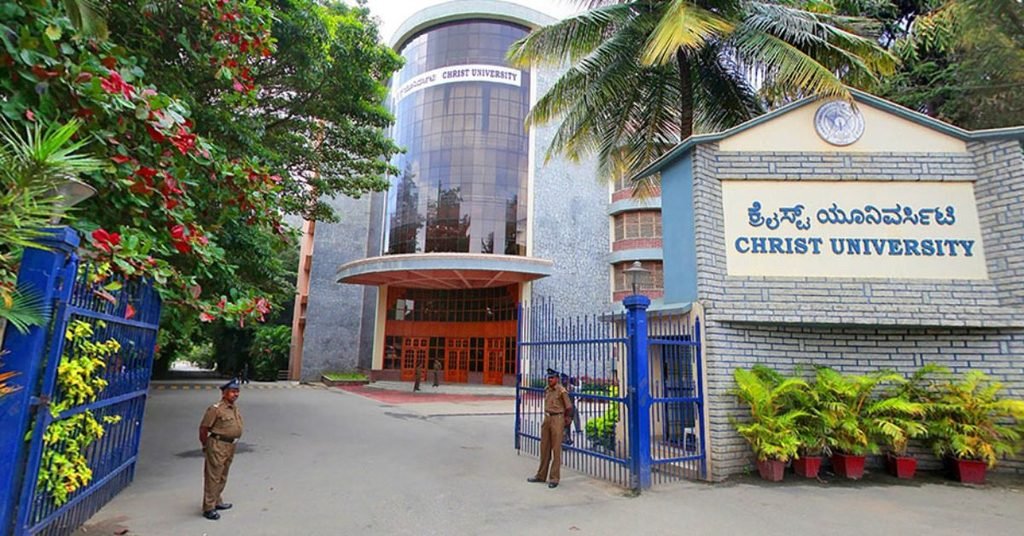
Christ holds NIRF Law Rank 24 in 2025, down from 15 in 2024. It remains one of the most sought-after private law schools in the city, known for its Hosur Road central campus.
Admissions: Christ runs its own law entrance exam, followed by a skill assessment and personal interview. CLAT is not mandatory. Class 12 eligibility is 45 percent.
Fees: Expect roughly ₹12–14.5 lakh for the five-year BA LLB. Hostel costs are extra.
Specialisations: Constitutional law, corporate law, criminal law, intellectual property and law and technology.
Best for: Students who want a structured, multi-track curriculum in a well-known university brand.
Check dates on the official Christ University website, because application windows close early.
3. School of Law, Jain (Deemed to be University)
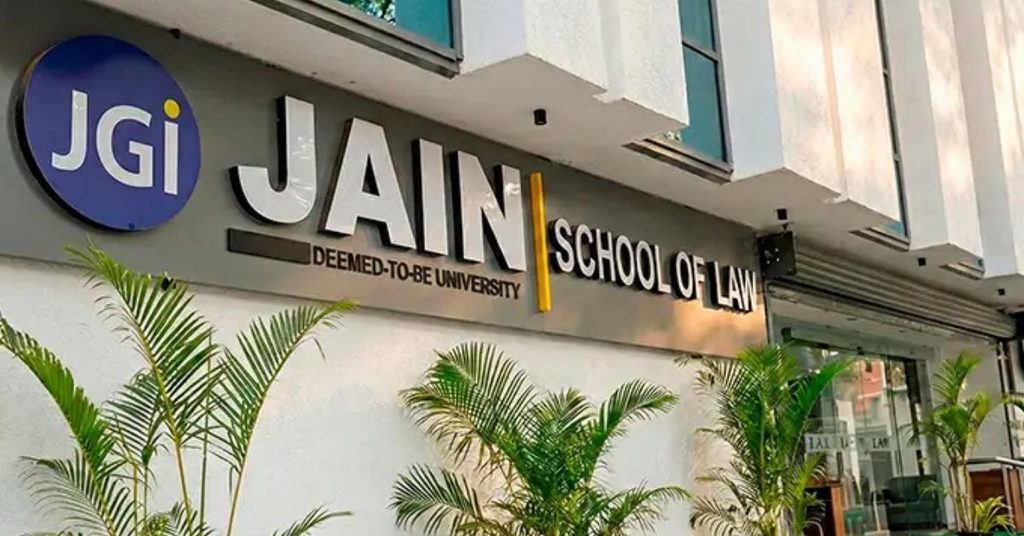
Jain offers BA LLB and BBA LLB (Hons) with an honours structure over ten semesters. It also runs a three-year LLB and an LLM.
Admissions: Jain accepts its own JET-Law test, or valid CLAT or AILET scores, followed by an interview. Class 12 eligibility is 45 percent (40 percent for reserved categories).
Fees: Reported total tuition for BA LLB is about ₹13–14.5 lakh.
Best for: Students who want an alternative to CLAT with multiple test windows. The BBA LLB intake is small at roughly 60 seats, so apply early.
Visit Jain University for current JET-Law dates.
4. Faculty of Law, PES University

PES positions its law programme around technology and business. Its BBA LLB (Hons) is taught at the Ring Road campus.
Admissions: Everyone goes through the PES entrance process, which includes an online interview. Candidates with CLAT or LSAT-India scores must still register but earn extra merit points.
Fees: Annual tuition is around ₹2.4 lakh, so about ₹12 lakh over five years.
Faculty note: The law faculty has reported an academic MoU with NLSIU, which can help with guest lectures and exposure.
Best for: Students interested in tech law, startups and in-house counsel roles.
See the PES law programme page for details.
5. Dayananda Sagar School of Law
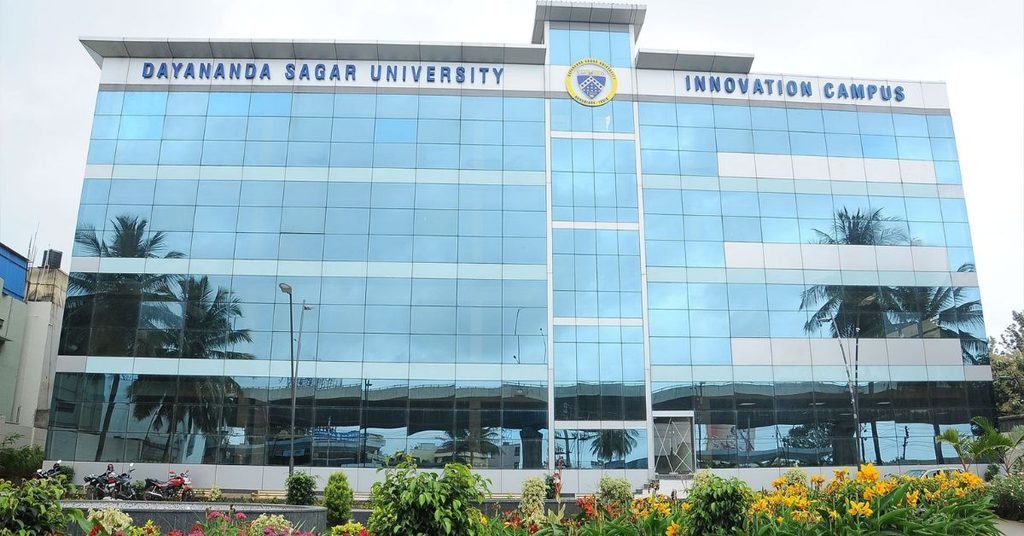
Dayananda Sagar University’s School of Law is a newer addition on Hosur Road. It markets a technology-driven, globally oriented curriculum.
Admissions: It accepts CLAT or its own DSAT.
Fees: The 2026–27 structure lists about ₹12.6 lakh in total for BA LLB, made up of roughly ₹10.1 lakh tuition and ₹2.5 lakh in other fees.
Best for: Students who value a modern campus and integrated engineering-and-law exposure within one university.
The official DSU School of Law page lists current programmes.
6. School of Legal Education, REVA University

REVA sits in Yelahanka and offers BA LLB and BBA LLB (Hons). An India Today 2025 law listing placed it 46th of 76 in India.
Admissions: REVA CET, CLAT or LSAT scores are accepted.
Fees: Reported tuition has ranged from about ₹7.5 lakh to ₹8.75 lakh for five years, which is moderate for a university campus.
Best for: Students wanting a green, large campus with hostel and transport facilities at mid-range fees.
Check REVA University for current fee notices.
7. School of Law, Presidency University

Presidency University is also in Yelahanka. It runs BA LLB, BBA LLB and B.Com LLB programmes, with internships across government bodies, nonprofits and law firms.
Admissions: Class 12 eligibility is 45 percent (40 percent for reserved categories). CLAT and LSAT-India scores are commonly referenced in selection.
Fees: Reported five-year tuition is about ₹6.25–8.25 lakh, depending on the programme.
Best for: Budget-conscious students who still want a university campus.
Start at the Presidency School of Law page.
8. CMR School of Legal Studies, CMR University

CMR’s law school has operated since 2003 and offers LLB, BA LLB, BBA LLB and LLM programmes.
Admissions: Selection is merit-based, with 45 percent in Class 12 for general candidates.
Fees: BBA LLB tuition is around ₹1.4 lakh a year, so roughly ₹7–7.4 lakh in total.
Best for: Students seeking lower fees and a direct admission route.
Confirm current details on the CMR University website.
9. M.S. Ramaiah College of Law
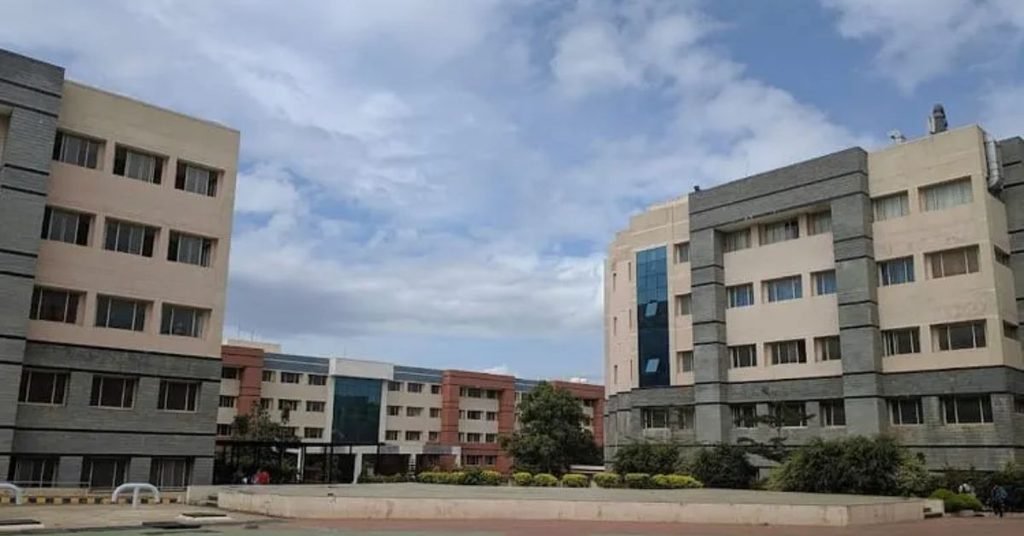
Established in 1995 and affiliated to Karnataka State Law University, Ramaiah is one of the city’s older private law colleges. It offers BA LLB, BBA LLB, B.Com LLB and LLM.
Admissions: Ramaiah conducts its own admission test followed by a personal interview. A minimum of 50 percent in Class 12 is reported.
Fees: Annual fees fall around ₹1.8–2.2 lakh, with Karnataka-domicile students paying less. Total BA LLB cost is reported near ₹8 lakh.
Best for: Students who prefer a legacy college with a focused law environment over a multi-discipline university.
10. Kristu Jayanti School of Law

Kristu Jayanti became a deemed university in 2025. Its law wing offers BA LLB, BBA LLB and B.Com LLB.
Admissions: Admission is direct and merit-based with an interview. No national entrance exam is mandatory. Class 12 eligibility is 45 percent (42 percent for SC/ST students of Karnataka).
Fees: BA LLB has been reported at about ₹6 lakh in total, among the lowest on this list. Confirm the current structure directly.
Best for: Students who want affordability and a straightforward admission process.
See the official Kristu Jayanti law admissions page.
Fees Comparison: Private Law Colleges in Bangalore (2026)
| College | Programme | Approx. Total Tuition (5 years) | Fee Notes |
|---|---|---|---|
| Alliance | BA/BBA LLB | ₹15–17.5 lakh | Early-payment rebate and merit scholarships |
| Christ | BA LLB | ₹12–14.5 lakh | Hostel extra |
| Jain | BA LLB | ₹13–14.5 lakh | Merit scholarships offered |
| PES | BBA LLB | ~₹12 lakh | ~₹2.4 lakh per year |
| Dayananda Sagar | BA LLB | ~₹12.6 lakh | Includes ~₹2.5 lakh other fees |
| REVA | BA/BBA LLB | ₹7.5–8.75 lakh | Discounts reported for Karnataka students |
| Presidency | BA/BBA/B.Com LLB | ₹6.25–8.25 lakh | Varies by programme |
| CMR | BBA LLB | ₹7–7.4 lakh | ~₹1.4 lakh per year |
| M.S. Ramaiah | BA LLB | ~₹8 lakh | Lower for Karnataka domicile |
| Kristu Jayanti | BA LLB | ~₹6 lakh | Confirm current structure |
Fees rise most years, and aggregator figures often disagree. Always request the latest official fee schedule in writing.
Admissions: How to Get Into a Private Law College in Bangalore
Most private law colleges in Bangalore run their own admission cycle. Here is the usual path:
- Check eligibility: Pass Class 12 with the minimum percentage the college sets.
- Register: Apply on the official website and pay the application fee.
- Take the test: Sit the college test, or submit a valid CLAT, LSAT-India or AILET score where accepted.
- Attend the interview: Shortlisted candidates face a personal interview or skill assessment.
- Confirm the seat: Pay the first instalment within the deadline.
Watch for multiple test windows. Christ and Jain run several phases, and early applicants often get first pick of seats and scholarships.
For national exam dates, see the Consortium of NLUs for CLAT and LSAT-India for LSAT. Colleges accepting LSAT scores often let you skip their own tests.
Cutoff: What It Really Means for Private Law Colleges
Most “cutoff” tables you see online list CLAT ranks for National Law Universities. These do not apply to private colleges that run their own tests.
Private law colleges use three filters instead:
- A minimum Class 12 percentage (usually 45–50 percent)
- A score in their own entrance test, or CLAT/LSAT where accepted
- An interview or skill assessment
| College | Entrance Route | Minimum Class 12 (as reported) | Selection Stages |
|---|---|---|---|
| Alliance | CLAT / LSAT / AUSAT | 50% (45% SC/ST) | Test + interview |
| Christ | Own law entrance test | 45% | Test + skill assessment + interview |
| Jain | JET-Law / CLAT / AILET | 45% (40% reserved) | Test + interview |
| PES | PES entrance process | Class 12 pass | Online interview (CLAT bonus) |
| Dayananda Sagar | CLAT / DSAT | Check official notice | Test-based |
| REVA | REVA CET / CLAT / LSAT | Check official notice | Test-based |
| Presidency | University selection | 45% (40% reserved) | Merit + documents |
| CMR | Merit-based | 45% | Merit + documents |
| M.S. Ramaiah | Own admission test | 50% | Test + interview |
| Kristu Jayanti | Direct merit | 45% (42% SC/ST Karnataka) | Interview |
Percentages are the published minimums. The real competitive bar is each college’s own test and interview. Seats at the stronger colleges fill well above the minimum.
Faculty: What to Check Before You Join
Faculty quality is the hardest factor to judge from brochures. Names change often, so verify on official pages. A few reliable checks:
- Qualifications: Look for faculty with LLM or PhD degrees and published research.
- Practitioner presence: Judges, senior advocates and corporate counsel as visiting faculty add courtroom and deal exposure.
- Specialisation depth: Christ lists five tracks, and PES and Dayananda Sagar emphasise technology law.
- Academic tie-ups: PES reports an MoU with NLSIU, which can bring guest lectures and workshops.
- Teaching resources: NIRF publishes a Teaching, Learning and Resources score for ranked institutions.
Ask the admissions office for the current student-to-faculty ratio. Sit in on a class or moot court session if the college allows campus visits.
Rankings: How the Bangalore Private Law Schools Stand
NIRF 2025 is the latest official law ranking confirmed at the time of writing. It was released on 4 September 2025.
| College | NIRF Law 2025 Rank | NIRF Score | Change vs 2024 |
|---|---|---|---|
| Alliance University | 20 | 60.83 | Down 2 |
| Christ University | 24 | 58.40 | Down 9 |
Christ slipped from 15 to 24, but both institutions remain in the top 25. Every other college in this guide is absent from the individually ranked list. REVA appears in India Today’s 2025 law ranking at 46 of 76.
Do not rely on rank alone. NIRF measures whole-institution performance, and participation is voluntary. The next edition may change these positions, so check the NIRF website for updates.
Comparison Table: Which College Fits You?
| College | Best For | Fee Level | Admission Difficulty | Watch-Out |
|---|---|---|---|---|
| Alliance | Corporate law, NIRF-backed brand | Highest | High | Premium fees |
| Christ | Multi-track curriculum, strong brand | High | High | Early application closure |
| Jain | Test flexibility (JET or CLAT) | High | Moderate–High | Small BBA LLB intake |
| PES | Tech law, startups | High | Moderate | Interview-driven |
| Dayananda Sagar | Modern campus | High | Moderate | Newer law programme |
| REVA | Value with a large campus | Moderate | Moderate | Fee has risen year on year |
| Presidency | Budget plus university campus | Low–Moderate | Low–Moderate | Not NIRF-ranked in law |
| CMR | Affordable, direct entry | Low–Moderate | Low–Moderate | Limited ranking data |
| M.S. Ramaiah | Legacy law college | Moderate | Moderate | Lower fees for Karnataka domicile only |
| Kristu Jayanti | Lowest-fee integrated law | Low | Low | Confirm current fees |
How to Choose the Right Private Law College
Use this simple framework:
- Set your budget first. Include hostel, books and moot-court costs, not only tuition.
- Check BCI approval. Confirm the programme on the Bar Council of India website. An unapproved degree cannot lead to practice.
- Match the specialisation. Corporate, criminal, IP and tech law are taught with different depth.
- Visit the campus. Meet current students and ask about internships.
- Compare scholarships. CLAT or LSAT scores can cut fees at some colleges.
If you are also weighing state options, read about the Karnataka State Law University, which affiliates several Bangalore law colleges.
Placements and Careers: Set Realistic Expectations
Law school placements are less standardised than engineering campus drives. Outcomes depend on internships, moot courts, publications and networking.
Recruiters typically include law firms, corporate legal teams, banks and technology companies. Many graduates also join litigation chambers or prepare for judicial services.
Published placement numbers vary widely between sources. Ask each college for its latest NIRF placement data and verified alumni outcomes instead of relying on headline packages.
Frequently Asked Questions
What are the top 10 private law colleges in Bangalore?
Alliance, Christ, Jain, PES, Dayananda Sagar, REVA, Presidency, CMR, M.S. Ramaiah College of Law and Kristu Jayanti are widely considered the leading private options in 2026.
Which private law college in Bangalore has the best NIRF rank?
Alliance University holds NIRF Law Rank 20 and Christ University holds Rank 24 in the 2025 list.
What is the fee for private law colleges in Bangalore?
Five-year tuition ranges from about ₹6 lakh to ₹17.5 lakh, depending on the college and programme.
Is CLAT compulsory for private law colleges in Bangalore?
No. Christ, Jain, PES, Ramaiah and Kristu Jayanti run their own processes. Alliance, Jain, REVA and Dayananda Sagar also accept CLAT or similar scores.
What is the cutoff for private law colleges in Bangalore?
There is no common cutoff. Colleges set a minimum Class 12 percentage, usually 45–50 percent, and then select through their own test and interview.
Is NLSIU a private law college?
No. NLSIU is a public national law university and holds NIRF Law Rank 1, so it is excluded from this list.
Are these colleges approved by the Bar Council of India?
Most established programmes are. Always verify the specific programme on the BCI website before paying fees.
Final Verdict
Alliance and Christ lead on official rankings. Jain, PES and Dayananda Sagar suit students who want modern curricula and can meet higher fees. REVA, Presidency, CMR, Ramaiah and Kristu Jayanti offer more affordable routes into a BCI-approved degree.
Shortlist three colleges, compare the latest official fee sheets and apply early. Verify every number on the college’s own website, because fees and dates change every cycle.
You nay also like : Get my course, Get My Course, Find Top Colleges
